Industrial Hydraulic Cylinder Price & Specifications
Weight Approx. 15-30 kg (varies by model)
Wall Thickness 6-20 mm (depending on bore size)
Usage Commercial
Temperature -20C to +80C
Structure Rotary Cylinder
Shaft Diameter 25 mm - 200 mm
Seals Type Polyurethane/NBR/Viton seals
Rod Hardened steel rod
Pressure Up to 350 Bar
Power Hydraulic
Max. Stroke Up to 3000 mm
Material Aluminum
Dimensions Customizable (typically 50-300 mm bore, 200-2000 mm stroke)
Capacity Varies by application (commonly 2 to 50 tons)
Supply Ability 50 Per Week
Payment Terms Cash in Advance (CID)
Main Domestic Market All India
Delivery Time 7 Days
About Industrial Hydraulic Cylinder Detail
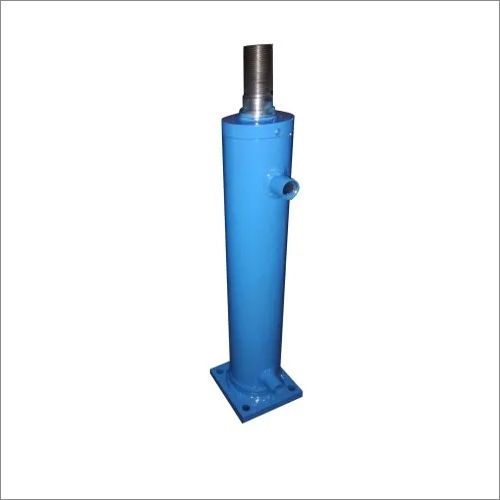
As the name suggests our Industrial Hydraulic Cylinder is mainly for industrial purposes. It has a capacity of 50 tons and is made with the best quality mild steel. This has a maximum pressure of 350 bars with a Rod diameter of 175 mm. The maximum stroke this cylinder has is 300 mm. This works well with a temperature of 80 degrees Celsius.
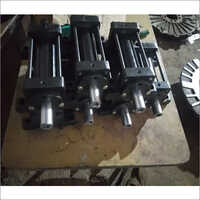
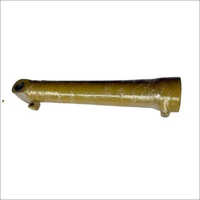
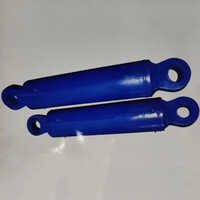
Tailored Mounting and CustomizationOur hydraulic cylinders are available with a range of mounting options-flanged, base, eye, or custom-to accommodate diverse installation environments. Port sizes and overall dimensions can be precisely tailored to your system's requirements, ensuring seamless integration into your industrial setup. Bespoke solutions are crafted upon request to address unique application needs.
Engineered for Longevity and ReliabilityWith painted or anti-corrosive coatings and premium chromium-plated steel rods, these cylinders are built for long-term durability in demanding environments. Comprehensive sealing technology and a rigorous, ISO-compliant testing process guarantee minimal maintenance and maximum operational uptime, making them ideal for heavy-duty industrial operations.
FAQ's of Industrial Hydraulic Cylinder:
Q: How can I select the best mounting style for my hydraulic cylinder application?
A: You can choose from flanged, base, eye, or bespoke mounting options based on your machine's installation needs and load requirements. Our team can help assess your application to recommend the most suitable configuration for optimal stability and ease of maintenance.
Q: What materials and surface treatments are used for enhanced cylinder longevity?
A: The cylinder body is finished with a protective painted or anti-corrosive coating, while the piston rod is manufactured from chromium-plated hardened steel. This combination ensures excellent resistance to corrosion, wear, and mechanical stress in industrial settings.
Q: When should end cushioning be considered for my hydraulic cylinder?
A: End cushioning is advisable if your operation involves high-speed movement or frequent direction changes, as it absorbs impact at the stroke ends. We offer end cushioning upon request to help protect both the cylinder and associated machinery from shock loads.
Q: Where are these hydraulic cylinders commonly used?
A: Our industrial hydraulic cylinders are utilized in factory automation, industrial presses, and construction machinery. Their customizability and robust design make them suitable for a wide spectrum of industrial and commercial applications.
Q: What is the process for customizing cylinder dimensions and port sizes?
A: Customization starts with a review of your application's specifications, including required bore, stroke, and port size. We then engineer and manufacture your cylinder to those exact parameters, ensuring flawless compatibility during installation.
Q: How does the factory testing ensure product reliability?
A: Each hydraulic cylinder undergoes 100% testing to ISO 6020/6022 standards, which includes pressure, sealing, and functional checks. This rigorous process ensures every cylinder meets strict quality and performance benchmarks before shipping.
Q: What are the benefits of using Polyurethane, NBR, or Viton seals in the cylinders?
A: Polyurethane, NBR, and Viton seals provide superior resistance to hydraulic fluids, temperature extremes, and wear. They help prevent leaks and extend service intervals, thereby reducing maintenance costs and maximizing equipment uptime.

 GST No.06BGHPH0210D1ZA


 Our Products